Tree Inspection & Risk Assessment
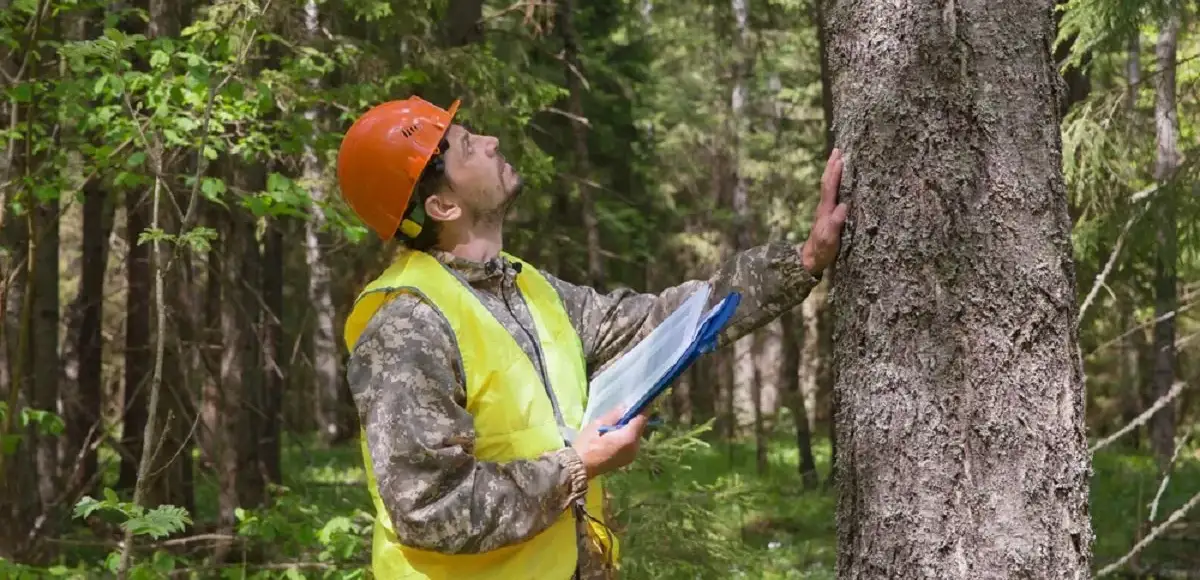
At Valley Tree Services, we provide thorough Tree Inspection & Risk Assessment services to homeowners, businesses, and property managers. As a trusted provider of tree services in Ottawa, we bring deep industry knowledge and certified arborist expertise to every job. Our certified arborists help you protect your property, safeguard people, and ensure the long-term health of your trees through proactive evaluation and expert care.
Why Tree Inspection & Risk Assessment Matters
Trees add beauty, shade, and value to your property, but like any living organism, they need inspection, care, and regular evaluation to stay safe and healthy. Our professional tree inspection service helps you identify threats before they become emergencies.
Tree failures can lead to property damage, blocked roads, or even injuries. Regular inspections reflect the growing need for proper tree care and risk management, especially in areas affected by extreme weather, construction, and pest activity.
Benefits of regular inspections include:
- Prevention of costly damage: Identifying weak or decaying trees early can prevent roof or fence damage, driveway upheaval, and blocked access routes.
- Public safety: Especially for trees near roads, schools, and commercial properties, inspections reduce liability risks.
- Tree longevity: Proactive care extends tree life and reduces the need for removals.
- Property value: Healthy, mature trees can increase property values by up to 15% (Arbor Day Foundation)
Our Trusted Partners




Key Elements of Tree Health Inspections
Yellowing, thinning, or wilting leaves may signal nutrient deficiencies, root issues, or infestations.
The presence of cracks, oozing sap, fungal growths, or hollow cavities are signs of internal decay or past injuries.
Exposed roots, heaving soil, or girdling roots can undermine a tree’s stability and nutrient uptake.
Invasive pests and diseases like Emerald Ash Borer and Dutch Elm Disease can quickly spread and affect surrounding tree populations.
Irregular growth, excessive leaning, or a thinning canopy can indicate internal stress or imbalanced resource distribution.
Tree Risk Assessment
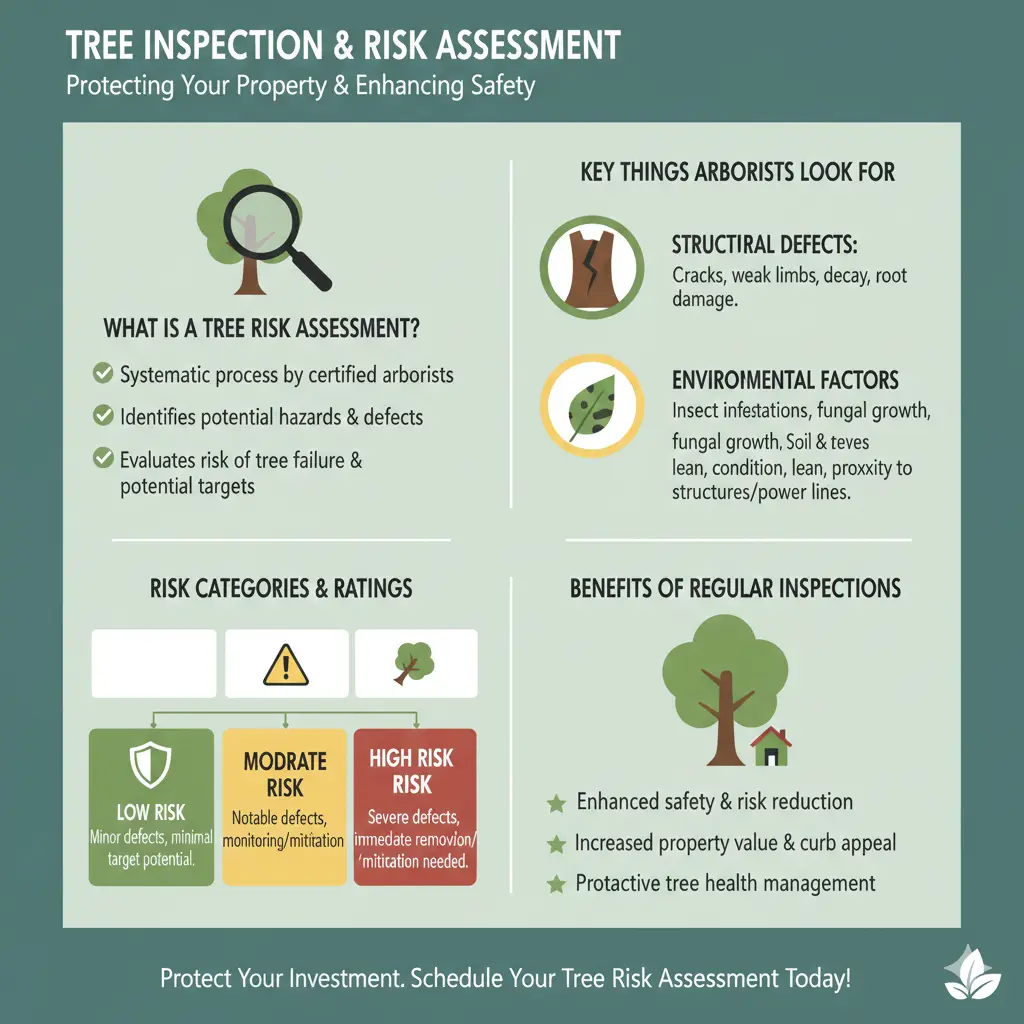
A Tree Risk Assessment evaluates the likelihood of tree or limb failure and the potential consequences if that happens. The International Society of Arboriculture (ISA) has developed standardized methods for this process.
What Our Arborists Look For
- Structural defects: Cracks, splits, codominant stems, or included bark weaken a tree’s architecture.
- Decayed or hollow areas: Using basic tools or advanced decay detection (e.g., sonic tomography), we locate internal rot.
- Severe lean or instability: Trees leaning >15 degrees from vertical, especially after storms, are closely monitored.
- Root problems: Root plate failure is a leading cause of whole-tree collapse, especially after saturated soil or high winds.
- Environmental pressures: Soil compaction, construction impact, or proximity to power lines are also considered.
Risk ratings are provided in categories: Low, Moderate, High, and Severe, with clear recommendations on mitigation.
Arborist Reports
After every risk assessment or health inspection, we provide a clear, structured Arborist Report tailored to your needs. These are valuable documents that can be submitted to municipalities, insurance providers, or used for construction planning.
What’s Included in an Arborist Report:
- Detailed findings with descriptions and images
- Risk level summary (using standardized rating scales)
- Maintenance recommendations (pruning, bracing, removal, monitoring)
- Tree inventory summary (species, condition, location)
- Municipal permit support (when applicable)
These reports are formatted to support homeowners, developers, HOAs, and commercial property managers.
Tree Safety Inspections
Tree Safety Inspections focus on preventing hazardous situations, particularly for trees that grow near high-use areas such as:
- Sidewalks and driveways: Cracked pavement or raised surfaces may be caused by expanding roots, creating tripping hazards.
- Power lines and transformers: Trees in conflict with utilities pose a fire or outage risk.
- Playgrounds, schools, and daycare centers: These areas require heightened safety standards due to child occupancy.
- Commercial entrances or parking lots: Regular inspections prevent liability claims from falling limbs or obstructed access.
Trees with visible cracks, hanging limbs, or evidence of recent soil movement need urgent evaluation. For landlords or property managers, routine safety inspections are a key part of liability risk reduction.
Post-Storm Tree Inspection
Following severe weather events, including windstorms, ice storms, and heavy snow, trees may suffer damage that isn’t immediately visible. Our Post-Storm Inspections ensure that hidden risks are uncovered.
Common Issues Detected After Storms:
- Split trunks and major limb fractures: These can compromise structural integrity and lead to delayed failure.
- Trees leaning after wind events: Sudden changes in posture signal root movement or breakage.
- Broken hanging branches hidden in the canopy: These are dangerous and often go unnoticed until they fall.
- Root upheaval in saturated soils: Wet conditions reduce anchorage, increasing risk of collapse.
These inspections are essential for identifying high-risk trees after a weather event.
What to Expect During a Professional Tree Inspection
- On-Site Arborist Arrival: Our ISA Certified Arborists arrive equipped with safety gear and diagnostic tools.
- Visual and Physical Evaluation: Trees are observed for signs of stress, defects, pests, and structural integrity. Tools such as mallets, probes, or sonic devices may be used.
- Risk Categorization: Each tree is classified based on the likelihood of failure and its potential target.
- Documentation & Reporting: You’ll receive a full written report with prioritized recommendations and timelines.
Our inspections follow ISA Best Management Practices and are accepted by most insurers and municipalities.
Tree Health Inspection Checklist – What Our Certified Arborists Evaluate
A professional tree health inspection involves a systematic evaluation of biological and structural indicators. Below is a breakdown of the key inspection points Valley Tree Services assesses during every Ottawa tree health evaluation.
Inspection Area | What We Examine | Why It Matters |
Foliage Condition | Leaf colour, density, premature drop | Indicates nutrient deficiencies, root stress, or disease |
Trunk & Bark | Cracks, cavities, fungal growth, sap flow | Reveals internal decay or structural weakness |
Root Flare & Root System | Soil heaving, exposed roots, girdling roots | Root instability is a leading cause of tree failure |
Canopy Structure | Deadwood, crossing branches, imbalance | Poor structure increases limb breakage risk |
Pest & Disease Presence | Emerald Ash Borer, Dutch Elm Disease, fungi | Early detection prevents spread and decline |
Growth Patterns | Leaning, uneven canopy, stunted growth | Signals internal stress or environmental impact |
Why Choose Valley Tree Services
With over 15 years of experience, Valley Tree Services has become a trusted name in professional tree care. Our commitment to science-based inspection methods and client education ensures that you receive both expert service and peace of mind.
- Fully insured and ISA Certified: Our arborists meet the highest industry standards and maintain up-to-date certifications to ensure best practices in all services.
- Knowledge of regional tree species and climate challenges: We understand how local weather, soil, and common pests affect tree health and use that insight to provide accurate evaluations and customized solutions.
- Responsive and reliable scheduling: We prioritize timely service and clear communication, ensuring your inspection or assessment happens when you need it most.
- Up-to-date risk assessment tools and standards: We use the latest diagnostic equipment and follow the International Society of Arboriculture (ISA) Tree Risk Assessment protocols for consistency, reliability, and safety.
- Transparent reporting and education: Our reports are easy to understand, with actionable recommendations and support for any follow-up care, permitting, or insurance needs.
- Trusted by local clients: Don’t just take our word for it, see what our clients are saying by visiting our testimonials page and Google Business Profile.
Areas We Serve in Ottawa
With a mix of urban and natural environments, Orléans requires tailored tree maintenance. We offer inspections, pruning, and pest control to protect residential landscapes.
Nepean’s mature neighborhoods and green spaces benefit from professional tree care. We provide expert pruning, safe removals, and disease control to preserve the local tree canopy.
Kanata is home to both new developments and established treescapes. Our team supports residents with planting, trimming, and emergency tree services for year-round safety.
In this rapidly growing suburb, we help homeowners manage storm damage, remove hazardous trees, and keep their properties safe and visually appealing.
What Our Clients Are Saying
We believe the best proof of our service comes directly from the homeowners, businesses, and property managers we proudly serve.
Excellent work, and great cleanup at the end. The guys are friendly and know their work exceptionally well. Any tree issues, and they are there quickly to solve the problem. No hesitation in calling them in the future.

Have had them come do some work on our tree a few times now over the years and always a great job, very professional and good pricing.
Valley Tree Services did an excellent job with our tree removal, and on a very hot summer day and did an excellent job with our tree trimming and stump/root removal. So grateful and would recommend them!
Awesome service with these guys. They removed several trees from our property and they left virtually no trace that work had even been done. They also cut up some larger trees that had already fallen. They were very professional. I highly recommend this business.
Great service. Valley Tree Services were very attentive to our specific concerns and came up with a plan to extend the life of our damaged tree. We have used them three times and have been very happy with their services and expertise.
Frequently Asked Questions
If you notice leaning, large dead branches, fungal growth at the base, cracks in the trunk, or root lifting, it’s time for a professional evaluation. Ottawa’s heavy snow loads, spring thaw cycles, and high winds can weaken trees quickly. Valley Tree Services provides detailed on-site tree assessments to determine structural integrity and safety risks.
A professional tree inspection includes evaluating the trunk, canopy, branch structure, root flare, soil conditions, and overall health. At Valley Tree Services, we assess for decay, disease, pest damage, storm stress, and structural weaknesses specific to Ottawa’s climate conditions.
Yes. After strong winds, ice storms, or heavy snowfall, trees may develop hidden cracks or root damage. Even if a tree appears stable, internal damage can create future hazards. Scheduling a post-storm inspection helps prevent unexpected limb failure or tree collapse.
For mature or large trees, especially those near homes or driveways, inspections are recommended every 1–3 years. Properties with older maples, oaks, or ash trees common in Ottawa may benefit from more frequent evaluations due to disease or environmental stress.
Yes. A professional inspection identifies whether a tree can be preserved with pruning and care, or if removal is the safest option. Valley Tree Services prioritizes preservation whenever possible but provides honest recommendations when safety is at risk.
Yes. If needed for property management, real estate transactions, or safety documentation, Valley Tree Services can provide a detailed written assessment outlining tree condition, risk level, and recommended next steps.
Common issues include Emerald Ash Borer damage, root rot from poor drainage, winter frost cracking, and fungal decay. Ottawa’s freeze-thaw cycles can also stress root systems. A professional inspection helps catch these problems early.
Not always. Some trees naturally grow at an angle. However, sudden leaning, exposed roots, or soil upheaval may indicate structural instability. A professional tree inspection determines whether the lean is stable or poses a risk.
Most residential tree assessments in Ottawa take 30–60 minutes, depending on the number and size of trees. Larger properties or wooded lots may require additional time for a thorough evaluation.
In many areas of Ottawa, tree removal, especially for large or protected trees, may require a permit under municipal by-laws. Requirements can vary depending on tree size, location, and property zoning. Valley Tree Services can help guide you through the local regulations and explain what may be required before removal.
Get a Free Estimate
Our Tree Services
Why Choose Valley Tree Services
With over 15 years of experience, Valley Tree Services has become a trusted name in professional tree care. Our commitment to science-based inspection methods and client education ensures that you receive both expert service and peace of mind.
- Fully insured and ISA Certified: Our arborists meet the highest industry standards and maintain up-to-date certifications to ensure best practices in all services.
- Knowledge of regional tree species and climate challenges: We understand how local weather, soil, and common pests affect tree health and use that insight to provide accurate evaluations and customized solutions.
- Responsive and reliable scheduling: We prioritize timely service and clear communication, ensuring your inspection or assessment happens when you need it most.
- Up-to-date risk assessment tools and standards: We use the latest diagnostic equipment and follow the International Society of Arboriculture (ISA) Tree Risk Assessment protocols for consistency, reliability, and safety.
- Transparent reporting and education: Our reports are easy to understand, with actionable recommendations and support for any follow-up care, permitting, or insurance needs.
- Trusted by local clients: Don’t just take our word for it, see what our clients are saying by visiting our testimonials page and Google Business Profile.
Valley Tree Services
Business Hours
Monday: 7AM – 6PM
Tuesday: 7AM – 6PM
Wednesday: 7AM – 6PM
Thursday: 7AM – 6PM
Friday: 7AM – 6PM
Saturday: 9AM – 5PM
Sunday: 9AM – 5PM

Get Started
Our friendly staff is happy to guide you through our wide range of tree services in Ottawa and match you with the right service for your property’s unique needs. We work with residential homeowners, property managers, commercial sites, and municipal clients.
Get a Free Estimate